Lakeside Residence
Birmingham, Michigan
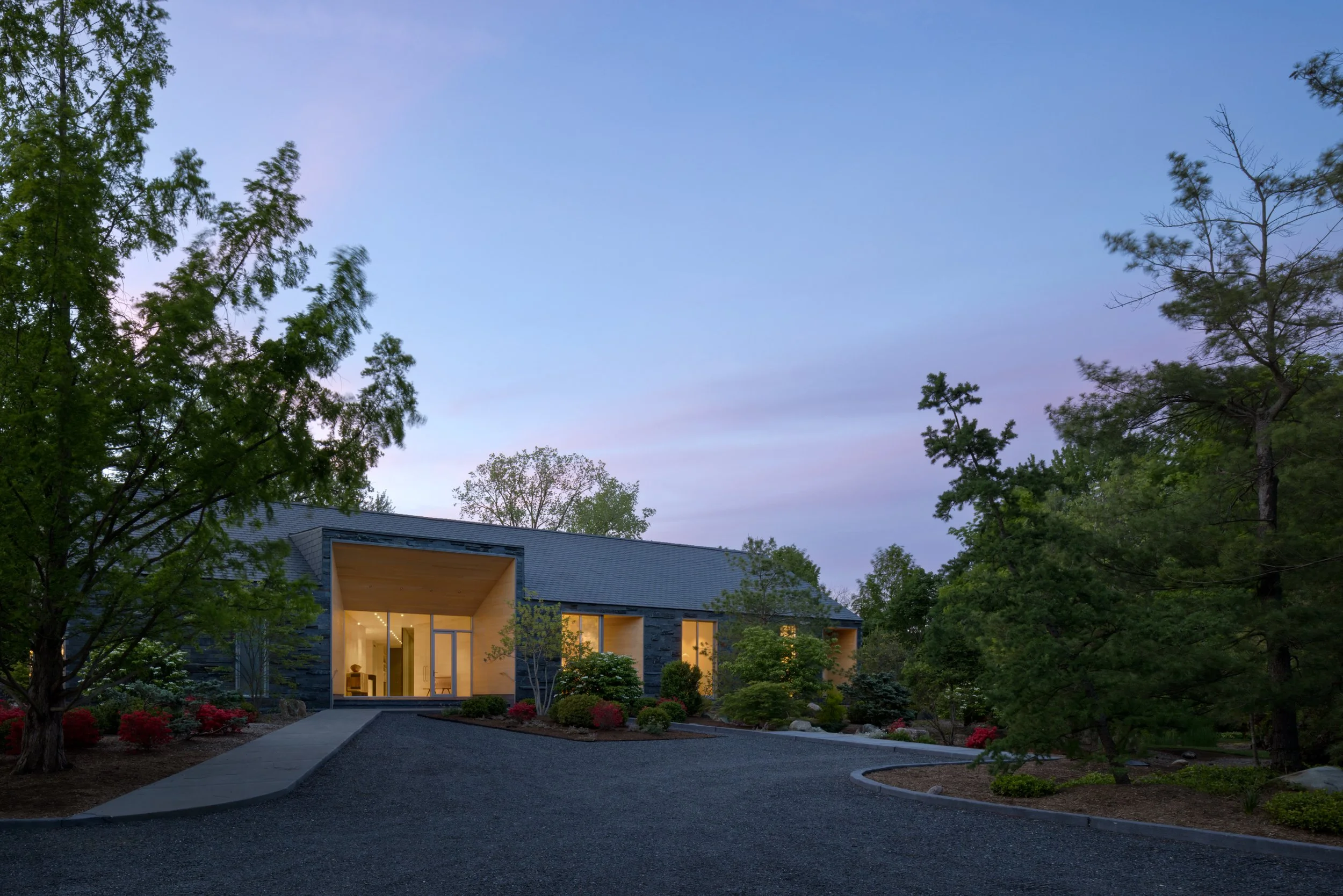
Located on a parklike suburban site with a river running through it, this Y-shaped home opens to a lush landscape. Designed for a former gallery owner and curator of Asian art, the home is inspired by the client’s family heritage in the lumber industry.
Location: Birmingham, Michigan
Area: 4,000 sq ft
Type: Residential
Status: Built
Builder: Thomas Sebold & Associates
Photography: Rafael Gamo
Awards
2026 AIA Detroit – Honor Award
2026 Architizer A+ Awards — Finalist
2025 AIA Michigan – Honor Award
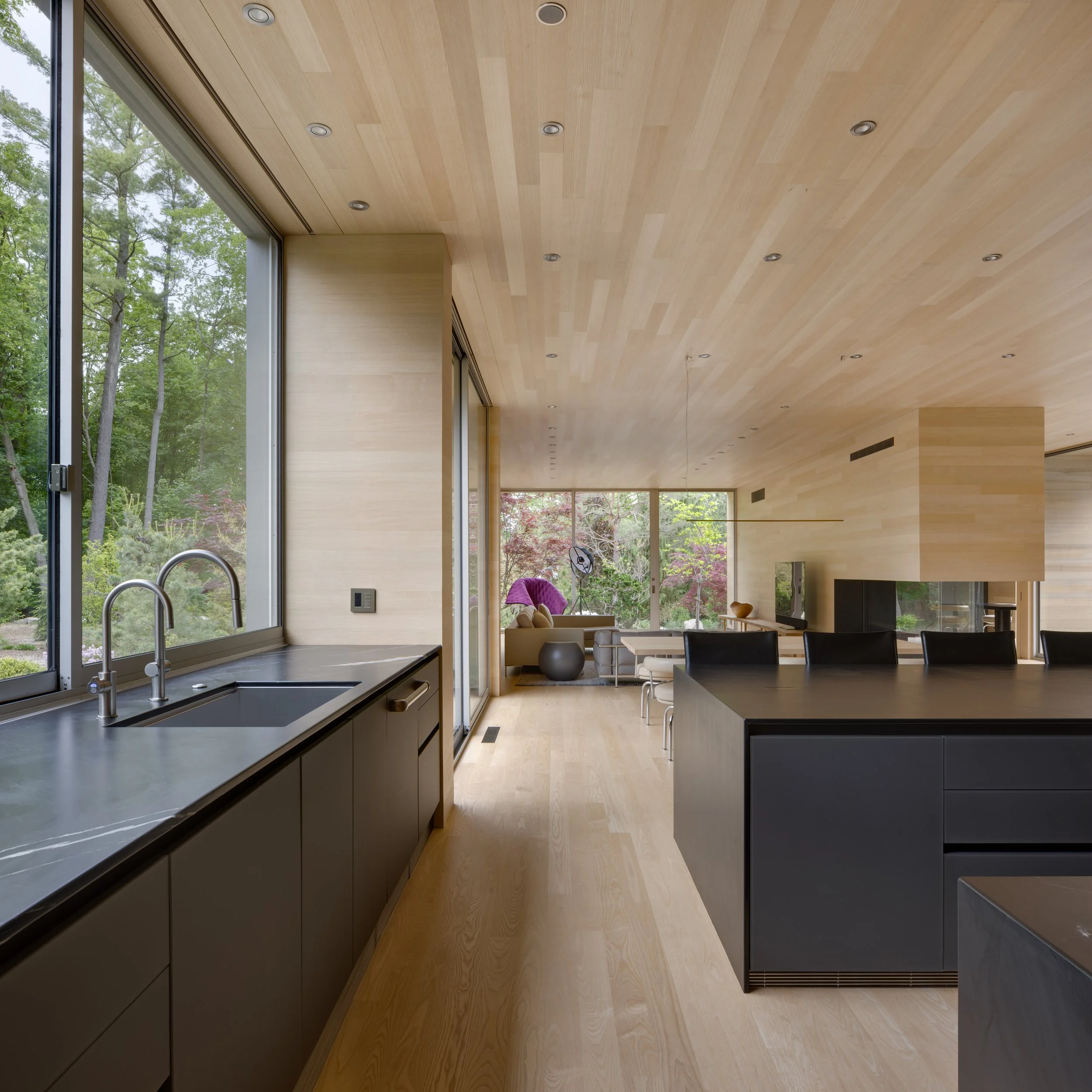
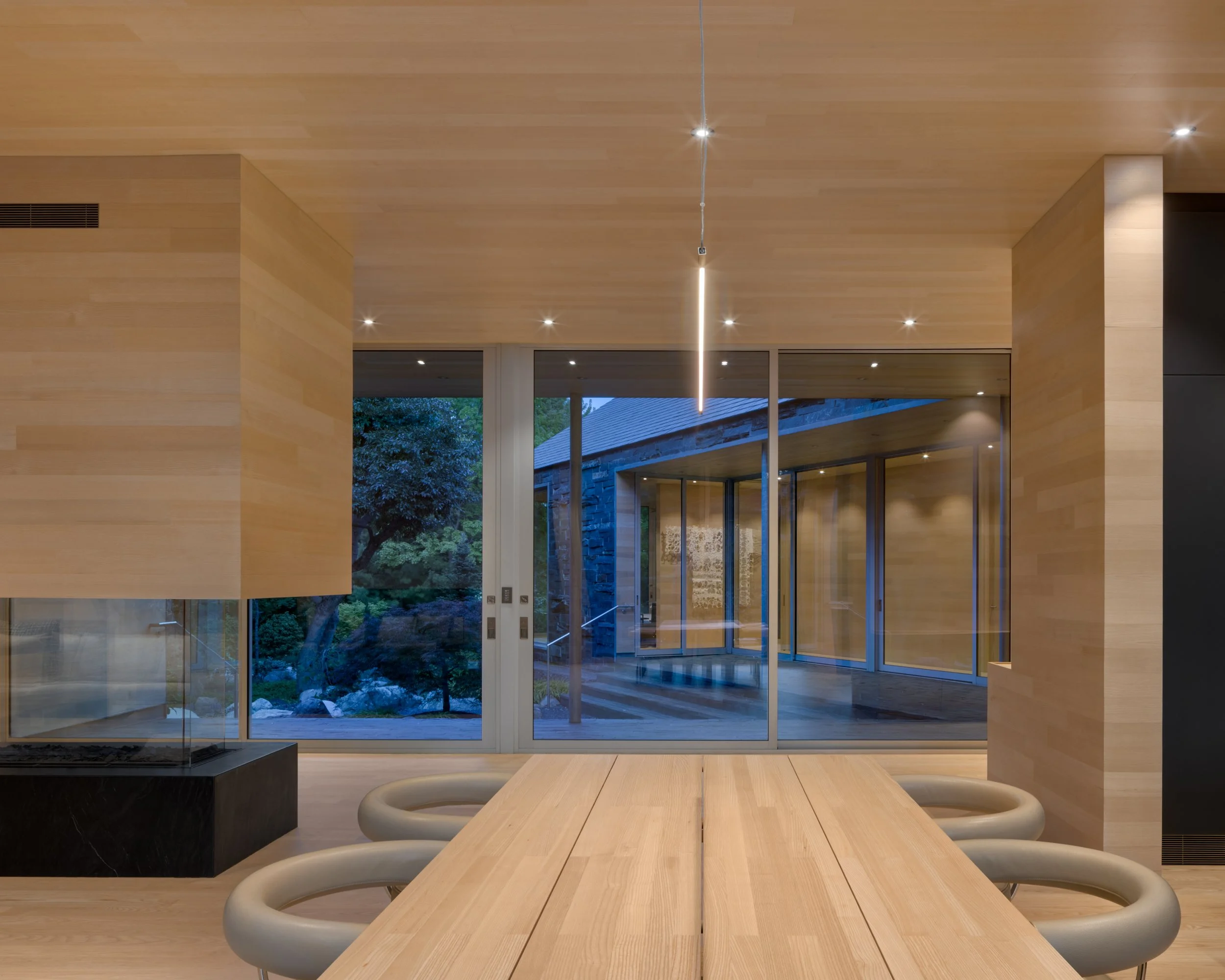
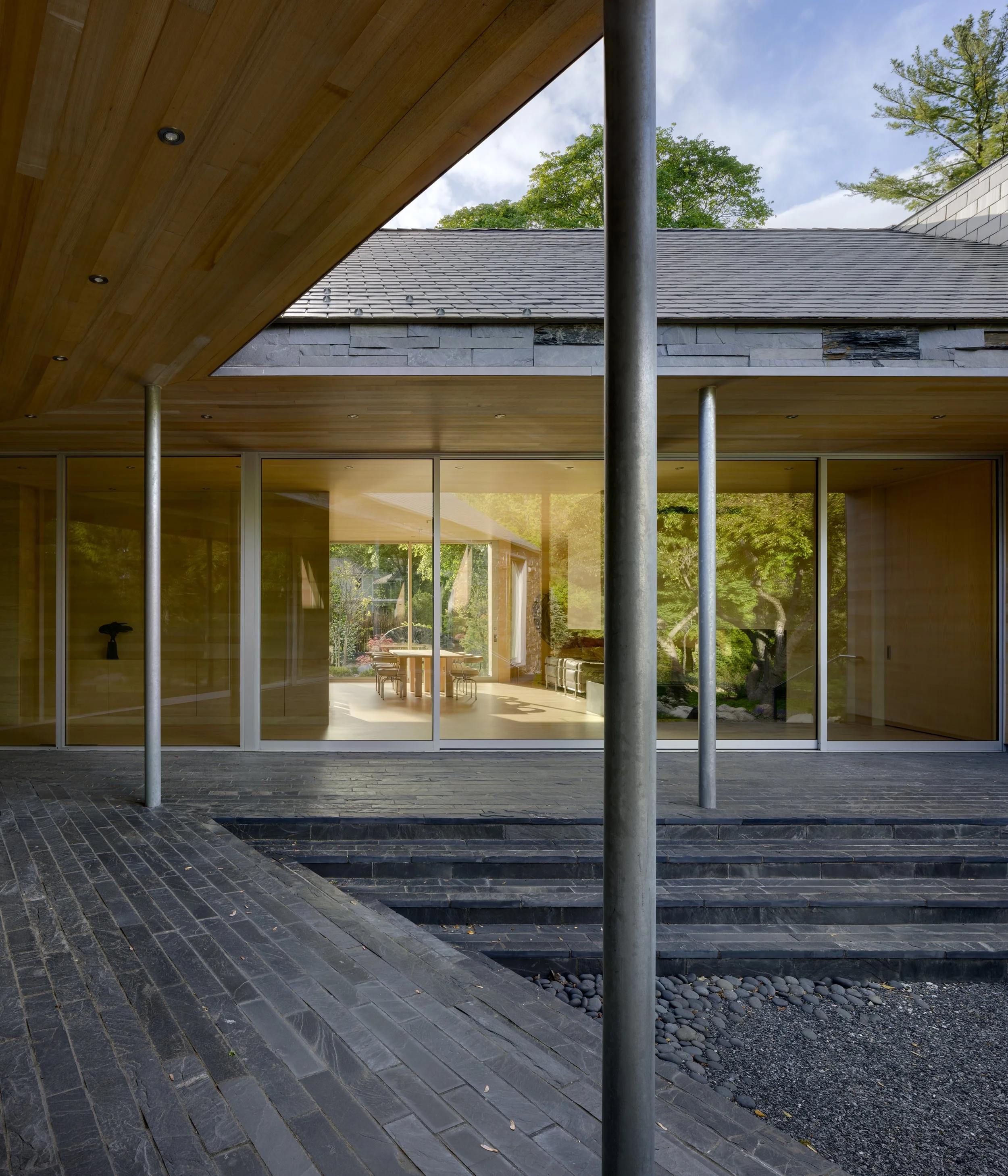
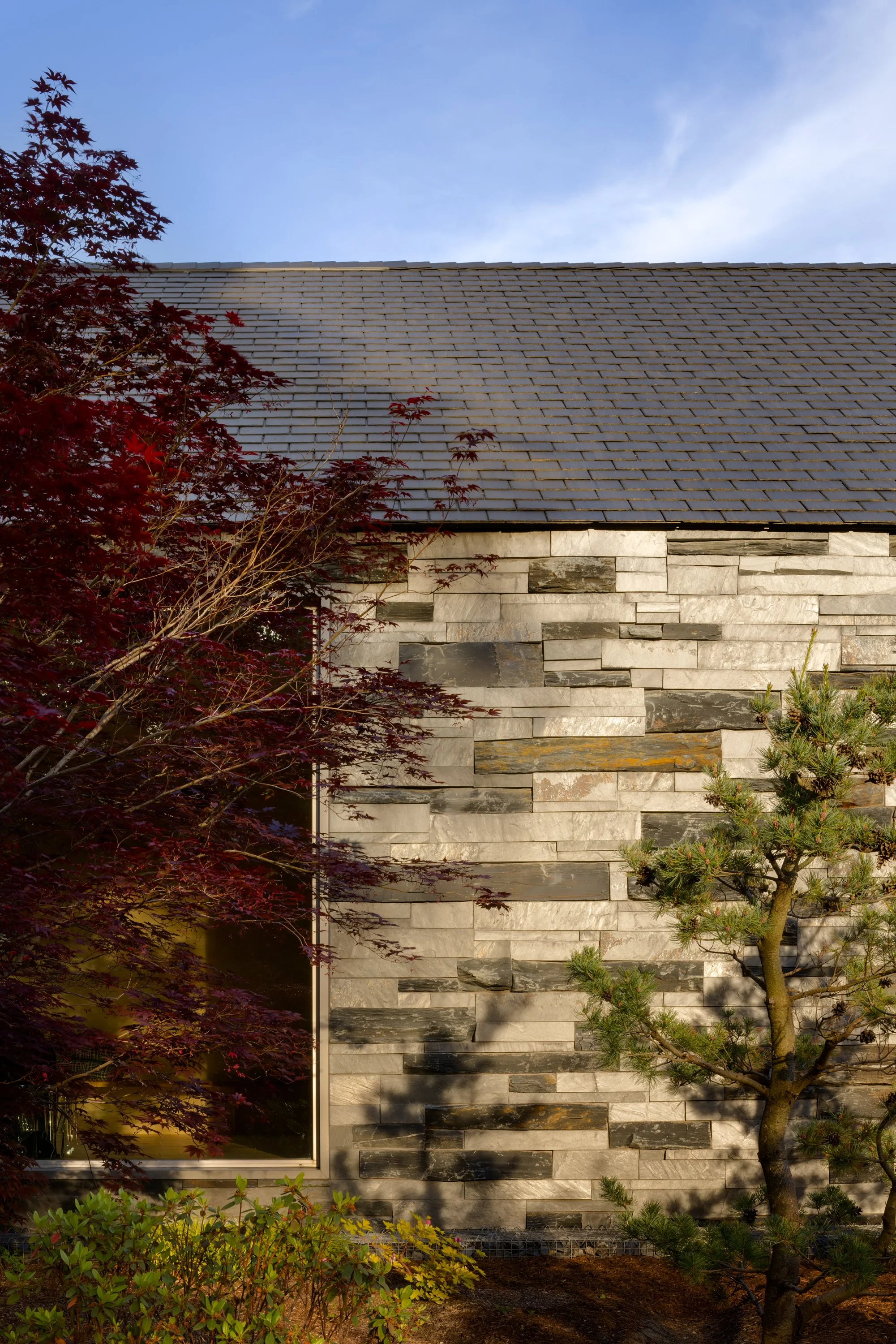
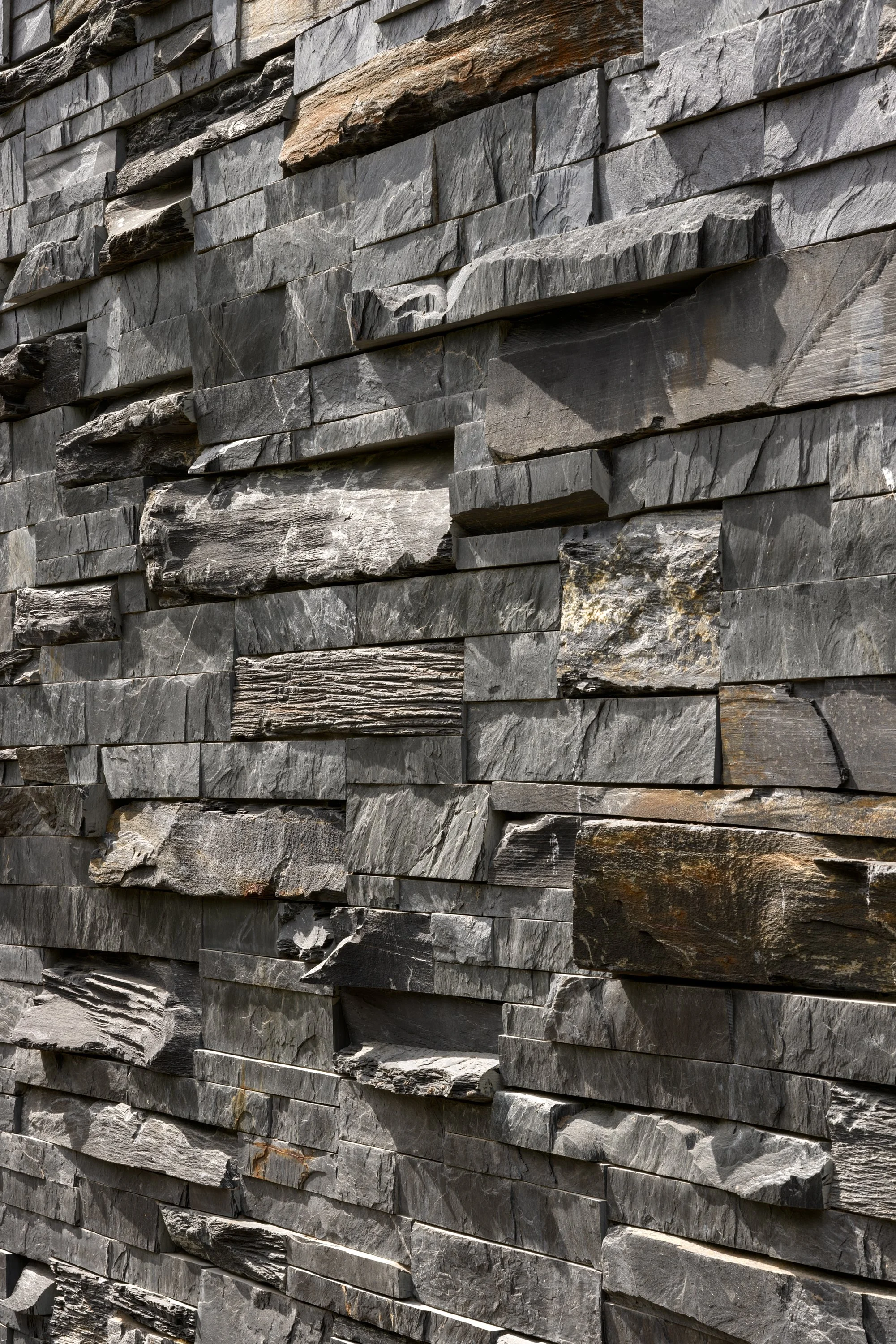
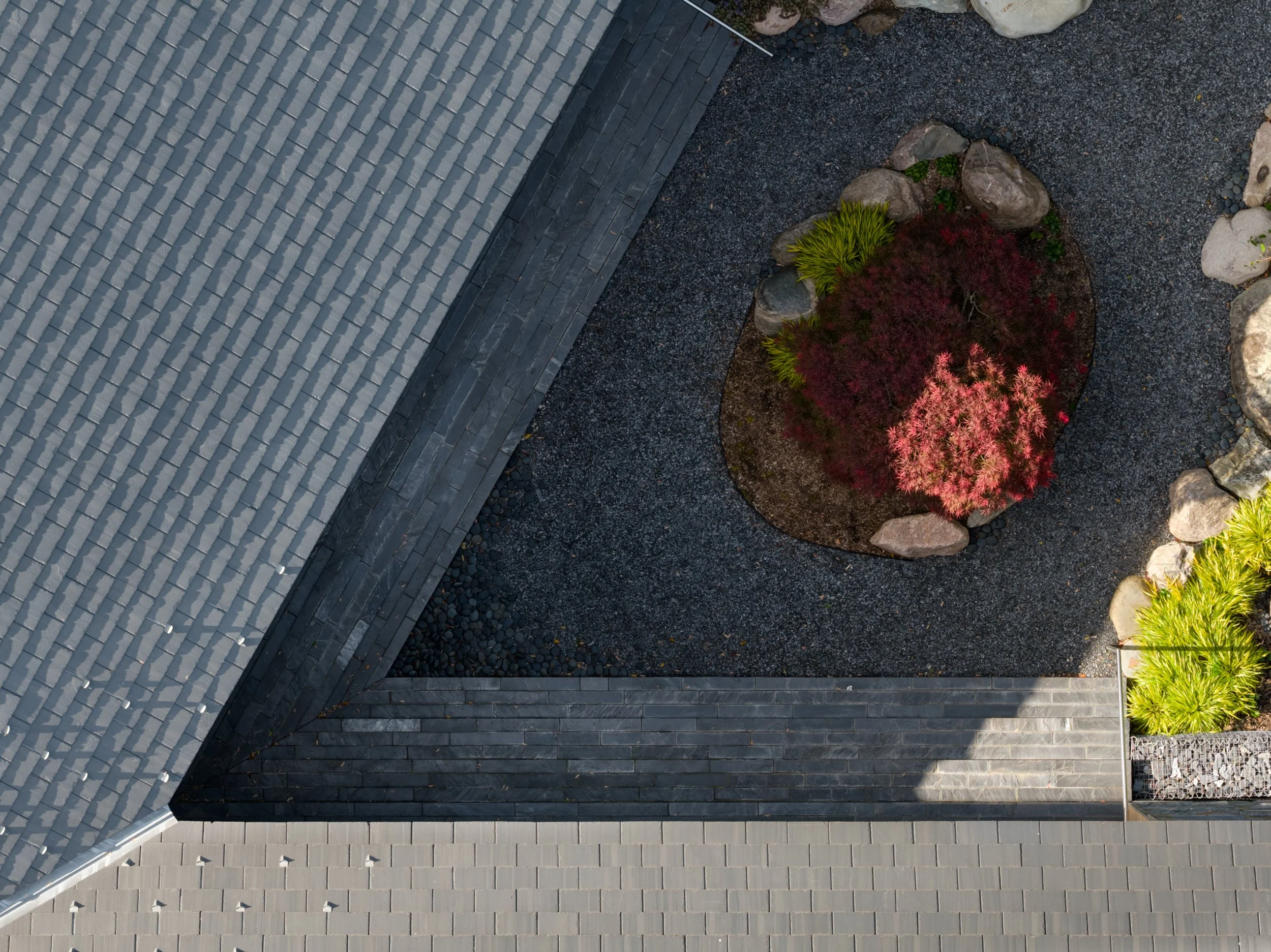
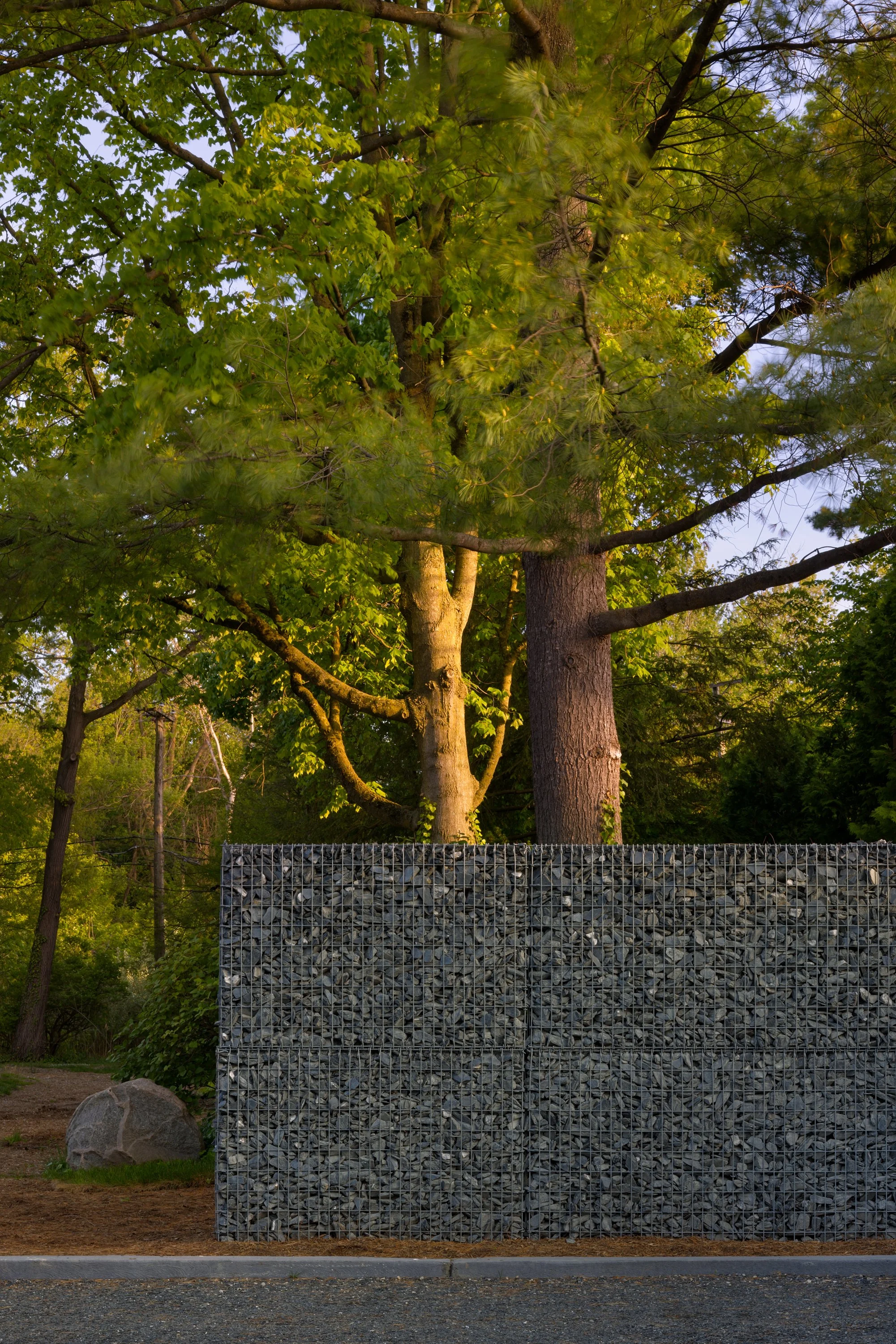
The project incorporates two primary materials: white ash and black slate, each used in various ways to highlight their physical characteristics. Slate was split into roof shingles, cleft for wall stone, cut for slabs, crushed for driveways, and all scraps were collected into gabions to create drainage and retaining structures. Throughout the day, the stone is transformed with the sun's movement. White ash ceilings, walls, and floors all have a consistent linear appearance. Subtle shifts from quarter-sawn to plain-cut boards quietly acknowledge key points of transition.
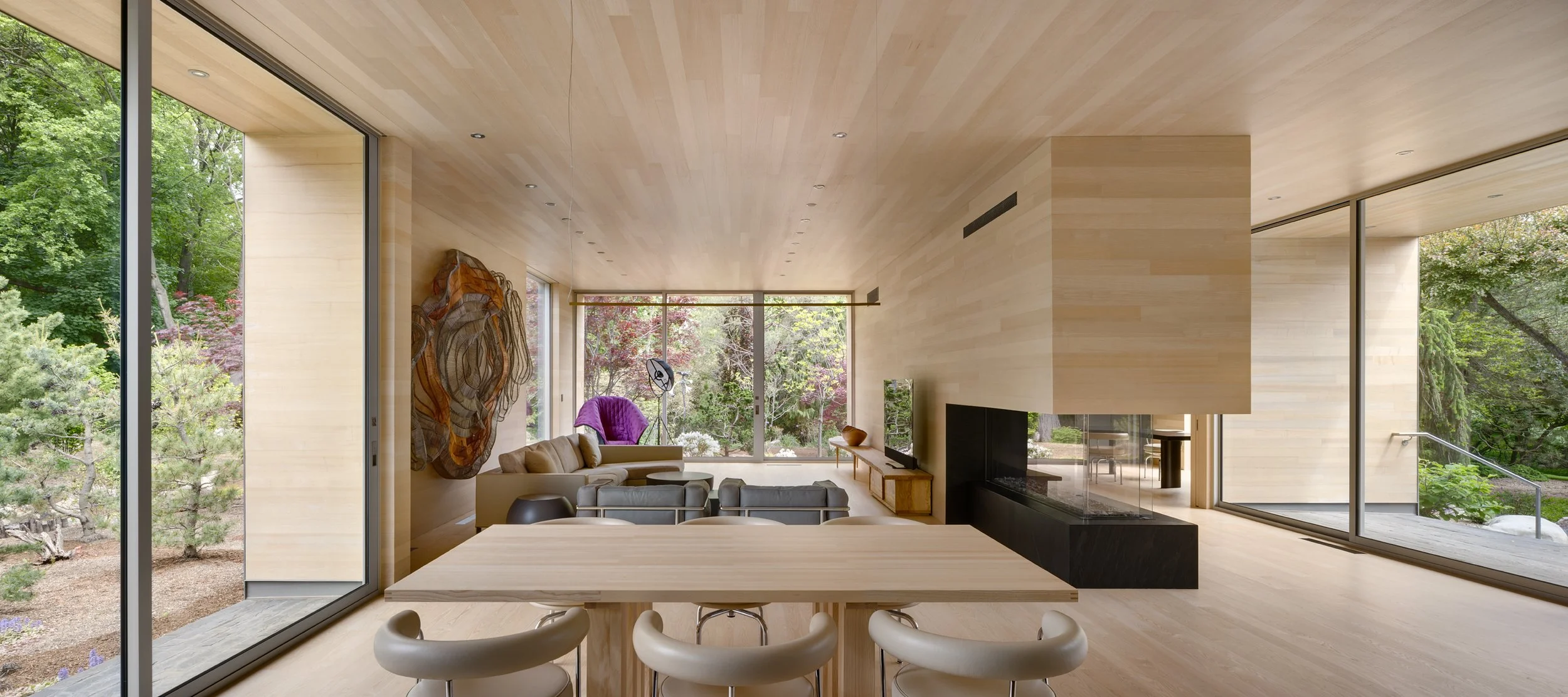
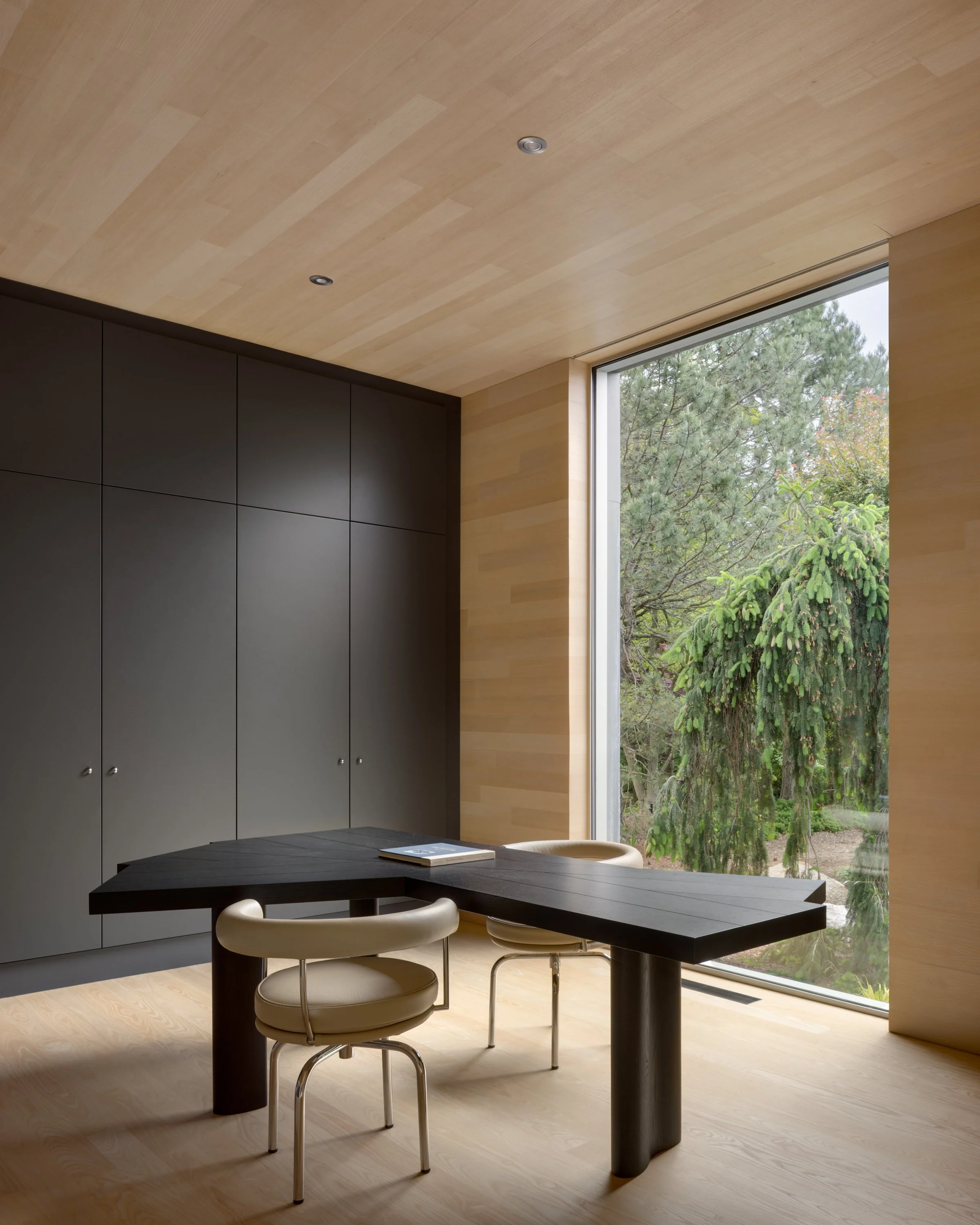
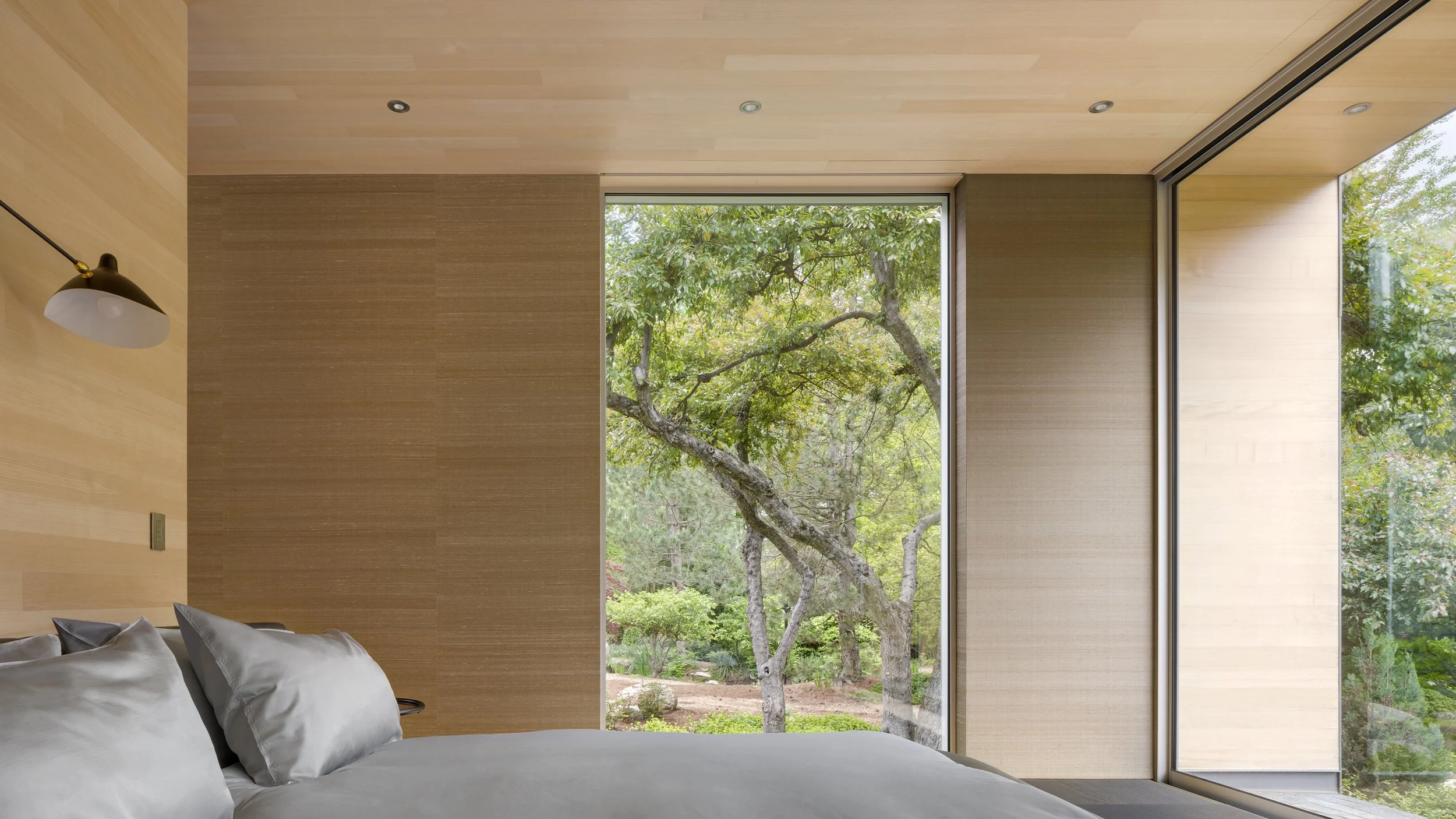
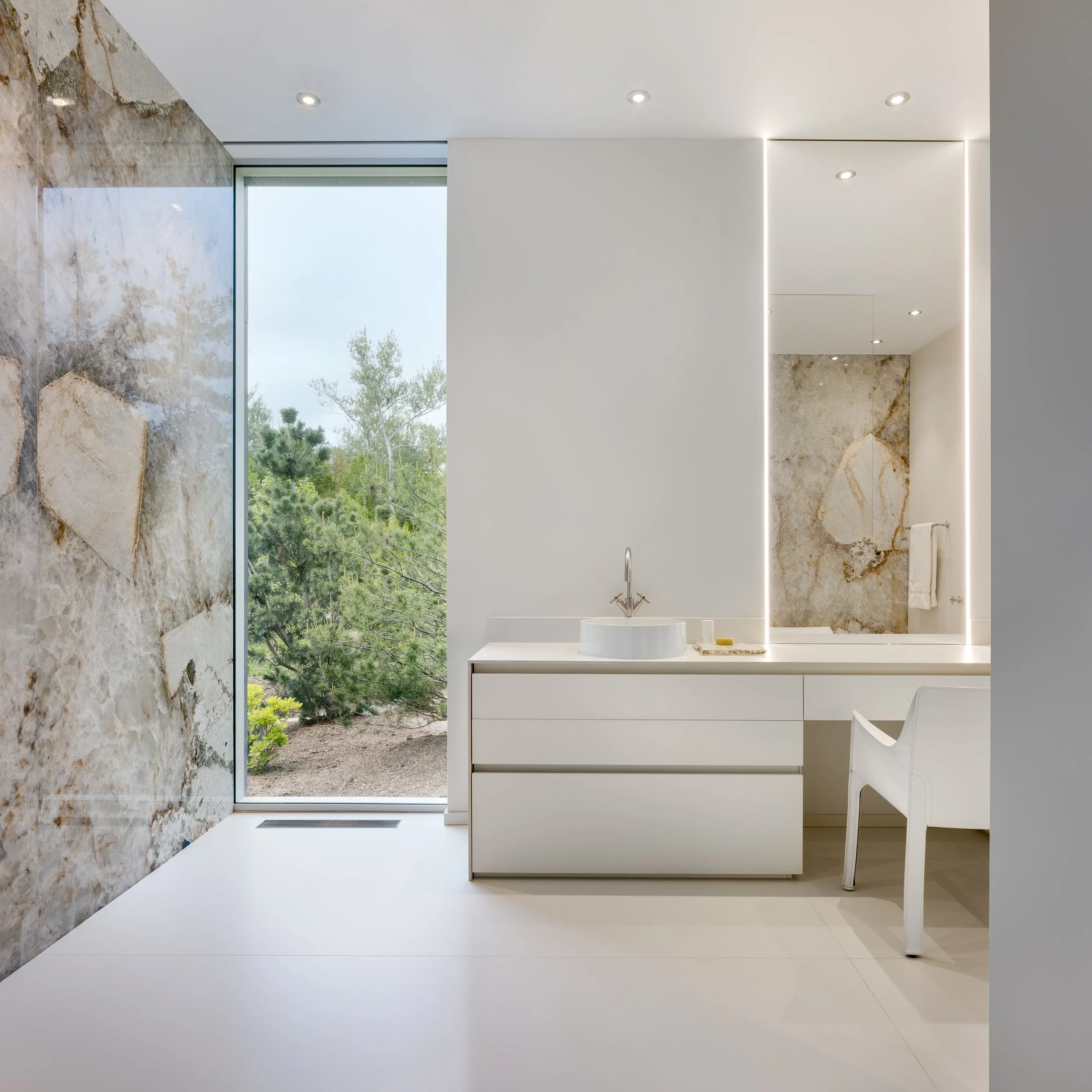
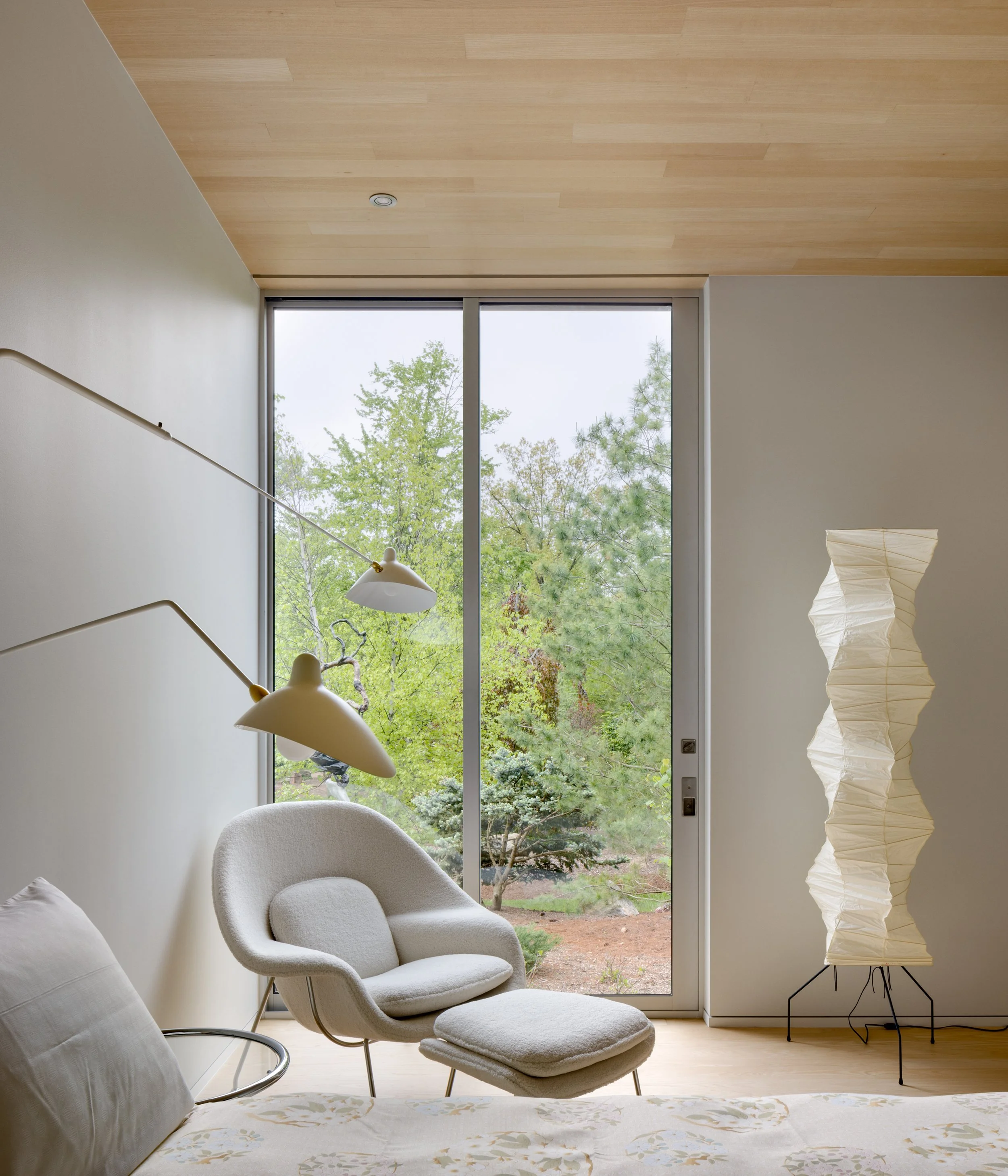
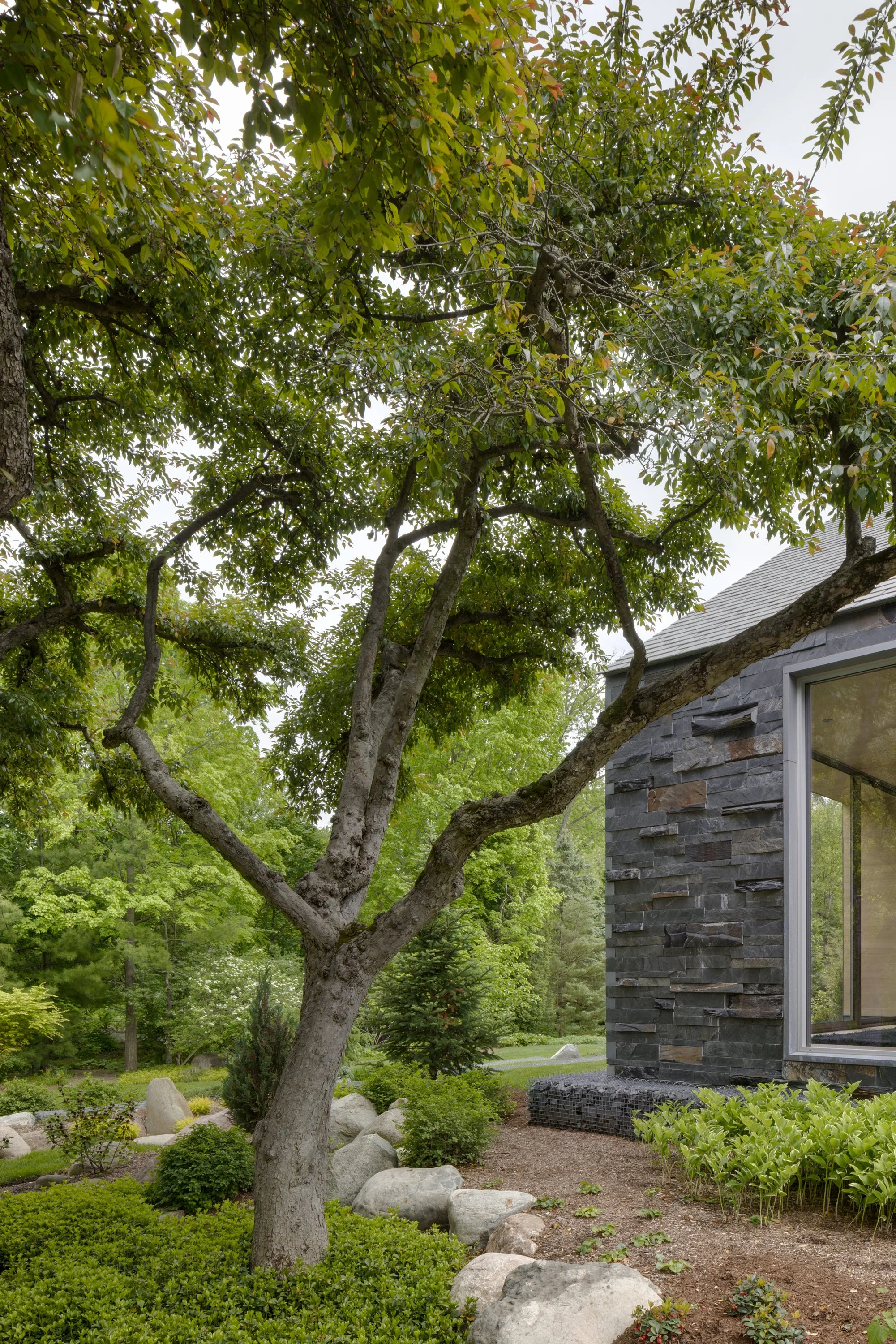
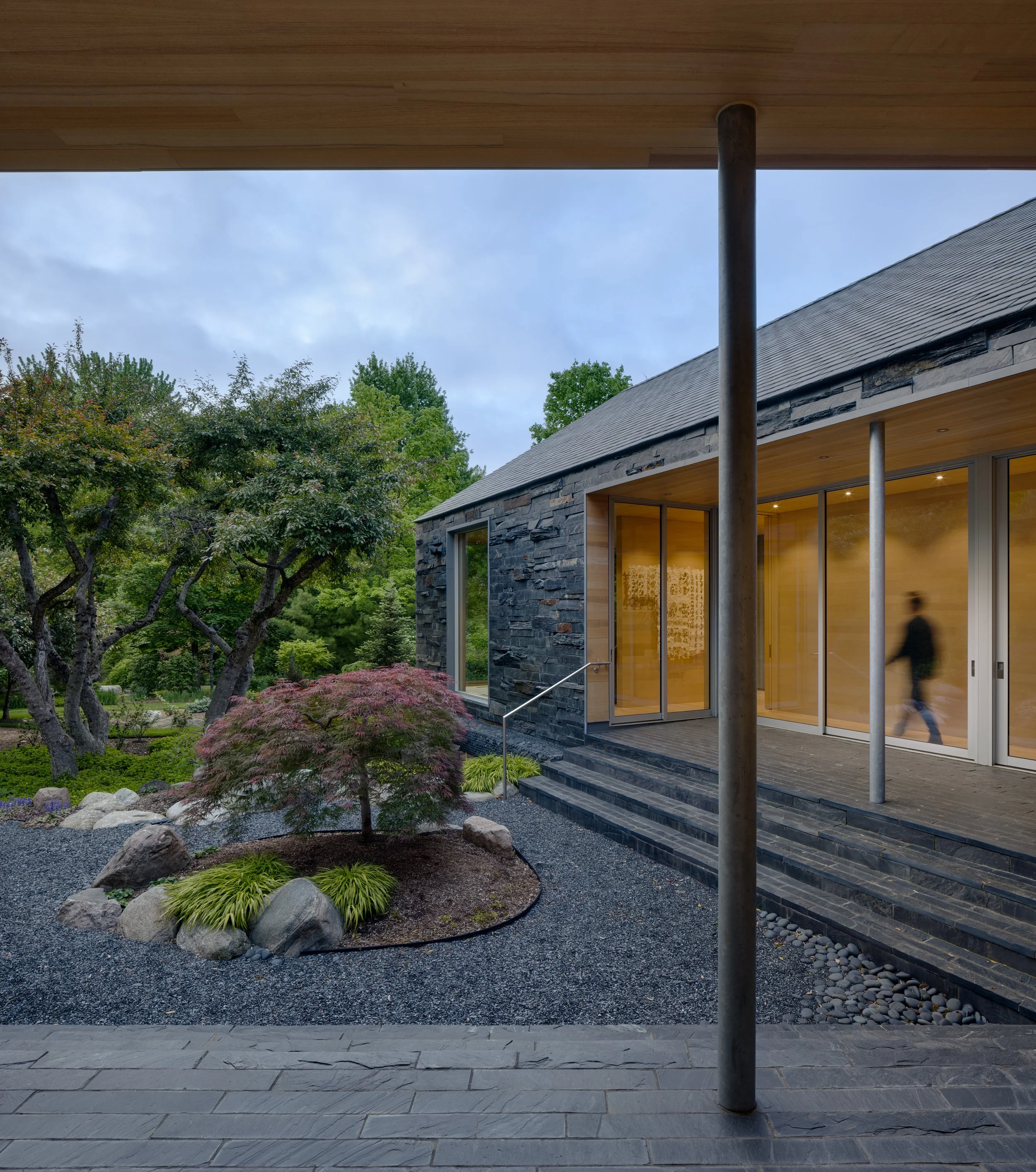
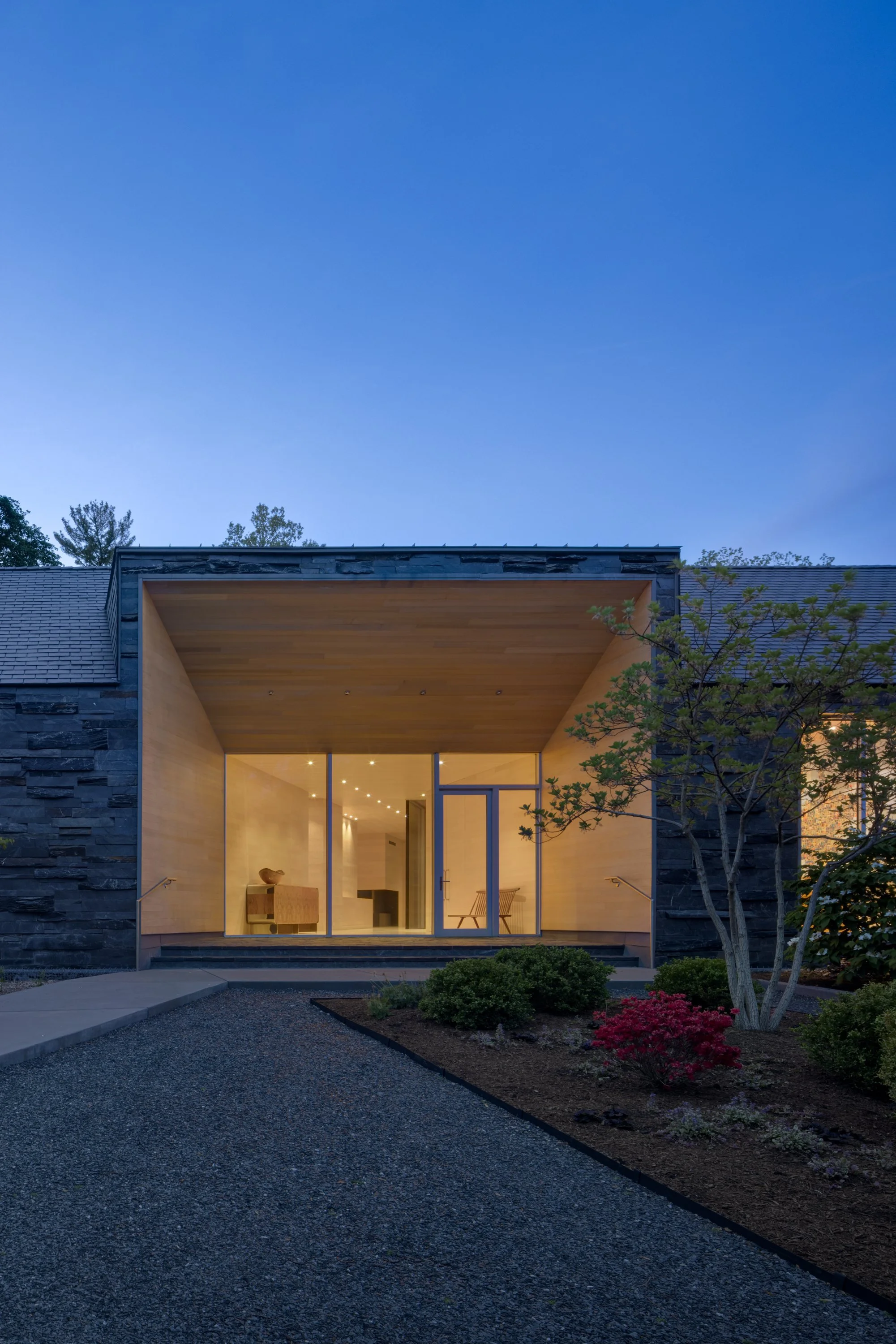
Like cutting into an apple, every opening in the slate exterior reveals the warm wooden interior. Openings set into the building shade the interior from the summer sun. The south-facing front entrance tracks that solar path, allowing the sunlight to fill the space in winter. Inside, glass walls span floor to ceiling and wall to wall, allowing unobstructed views of the landscape. The interior volumes frame curated outdoor scenes, like Japanese woodblock prints that the client collects. As the landscaping is intentionally designed to be experienced from within the home, the layered plantings, surfaces, and sculptural works become the focal points of each room. This strategy forges a connection between the built and natural worlds that infuses and enhances residents' day-to-day lives.
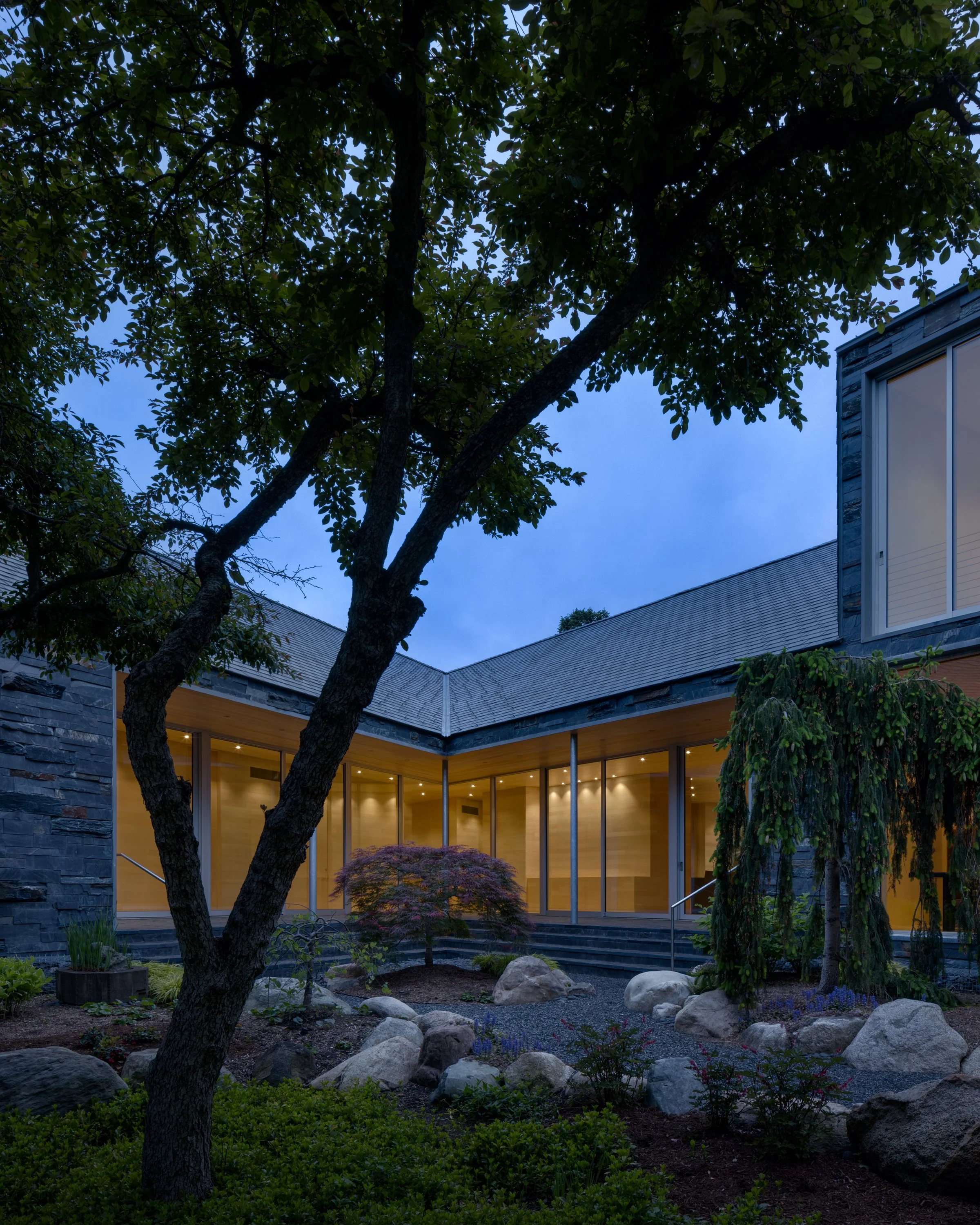
The first steps in planning this home were to minimize disruption to the riverside site, manage water on the flood-prone site, and take advantage of passive opportunities to make the home more sustainable.
Conscientious use of resources was foundational to the Lakeside Residence's design. Slate is a natural product with very low embodied energy that requires minimal processing. The black slate all came from the same Virginia quarry and was used in several ways to eliminate waste. It was split and cut for slate block walls, roof shingles, interior slab surfaces, and paving stones. Scraps were collected into gabion drainage/retaining structures, used as landscape edging, and crushed for driveways. In addition to highlighting the material, this strategy eliminated waste and minimized material removed from the earth. Slate is also resistant to fire, hail, acid rain, and insects; it is recyclable, and it lasts for generations.
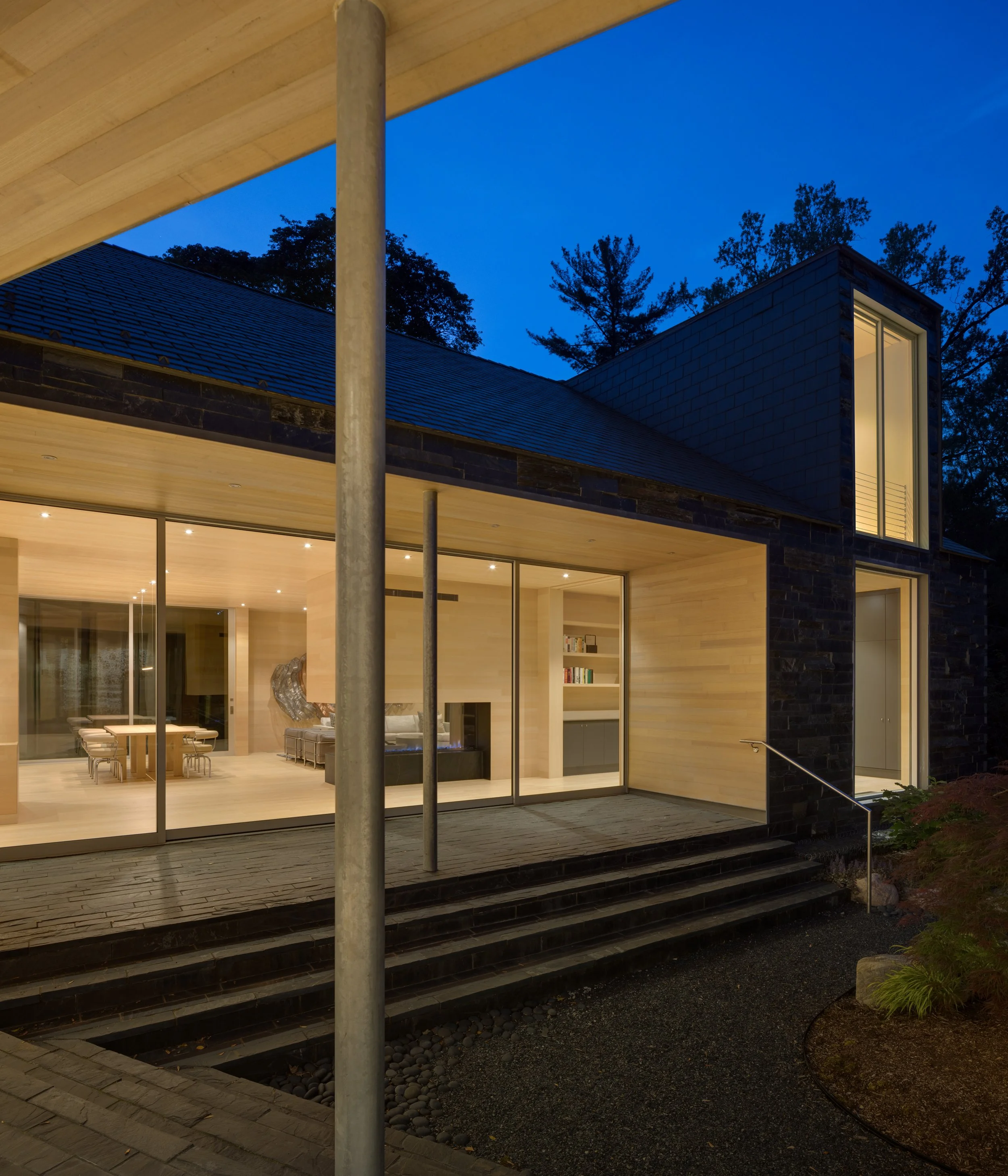
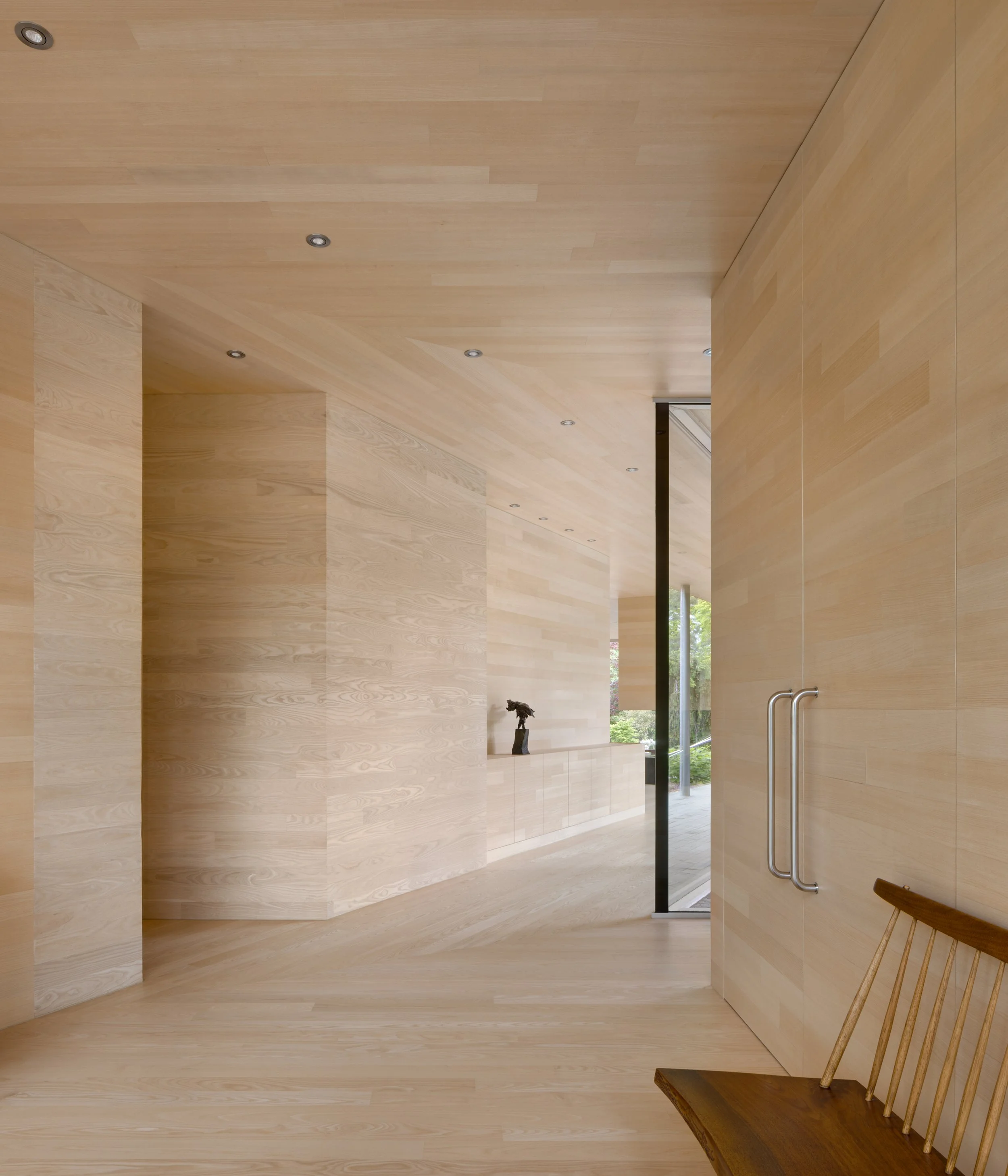
White Ash veneer flitches were selected that highlighted the appearance of the wood depending on how it’s cut. The veneer was bonded to 4” wide engineered softwood tongue and groove planks for walls and ceilings. Floors were fabricated in a similar way, incorporating a ¼” thick top layer that can be sanded and refinished. All white ash used on the project was locally fabricated. The sustainably sourced timber material sequesters carbon within the finished surfaces of the home while providing visual quiet and warmth.
The thermal envelope and structural systems were selected for efficiency, to reduce energy consumption, and to create a healthy interior environment. High-performing insulated and coated glazing reduces heat loss and solar heat gain. Lightweight wooden roof trusses lessen the amount of material required. Wood-framed walls and floors sit on a crawlspace rather than a full basement, drastically reducing the amount of concrete necessary. Two inches of continuous exterior insulation combined with 6” batt and a “hot roof” greatly reduce the risk of condensation, which could lead to air quality problems.
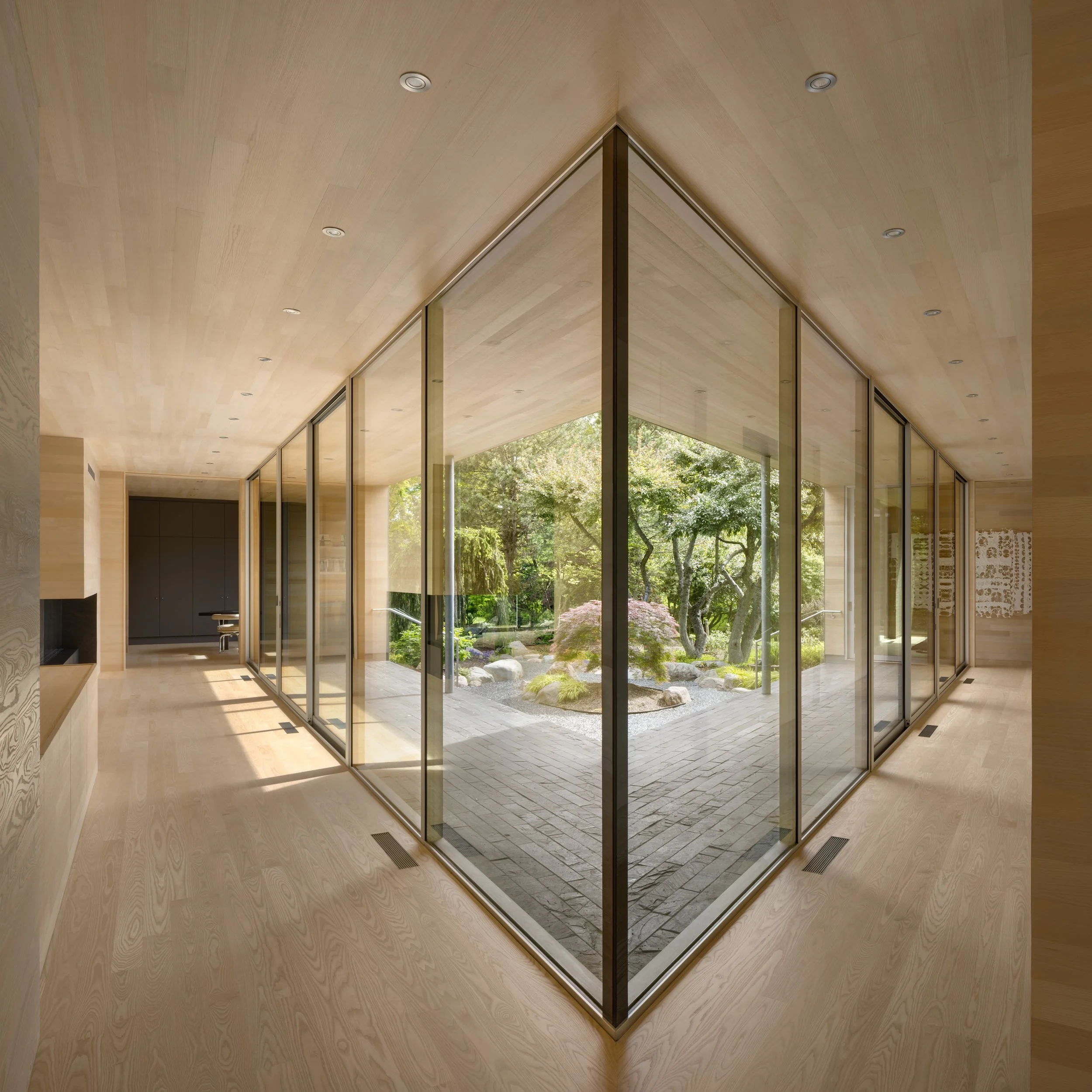
Connecting interior spaces to nature is the focus of every room in the home. Each space opens, literally and figuratively, to the elaborate landscape outside. The warmth of the wooden interior, the color temperature of the lighting, and the material selections all promote well-being and a healthy living space. Interior spaces were organized around a courtyard, with floor-to-ceiling glazing shielded from direct sunlight. The inset windows and primary entrance control solar heat gain. Perimeter gabion French drains manage rainwater. Extensive exterior plantings improve air quality and provide habitats for wildlife. Permeable slate gravel driveways reduce runoff.